Choosing a new display should be exciting. Instead, many buyers encounter an alphabet soup of terms: LCD, LED, QLED, Mini-LED, OLED, and MicroLED. Some describe genuinely different technologies, while others are refinements or marketing names for technology you may already know.
The best display is not automatically the newest or most expensive one. It is the display that fits your space, lighting, content, viewing distance, operating hours, and budget. This guide explains the important differences in plain language and helps you narrow down the right choice.
The short answer
Choose an LED-backlit LCD if you want broad selection, high brightness, and strong value.
Choose Mini-LED or a premium LCD for a bright room, sports, gaming, or impressive HDR without moving to OLED.
Choose OLED for deep blacks, cinematic contrast, wide viewing angles, and premium picture quality—especially in a controlled-light room.
Consider direct-view LED for a very large commercial display, video wall, stage, lobby, or outdoor installation.
Consider MicroLED when you need a premium, modular, self-emissive display and the project budget can support it. For most everyday buyers, it remains a specialized luxury or commercial solution.
First, an important clarification: most “LED TVs” are LCD TVs
LED and LCD are often presented as competing categories, but the terminology can be misleading.
An LCD panel creates the image by controlling liquid crystals, but those crystals do not make their own light. They need a light source behind or around the panel. In nearly every modern LCD television, that light comes from LEDs. In other words, an “LED TV” is normally an LCD TV with an LED backlight.
This is different from a direct-view LED wall, where the LEDs themselves form the visible image. The distinction matters because the two products differ greatly in size, construction, price, viewing distance, and typical use.

LED-backlit LCD displays use a separate backlight, while OLED pixels produce their own light and direct-view LED displays create the image directly with individual LED pixels.
Swipe horizontally to view the full table.
| Technology | How It Creates an Image | Biggest Strengths | Main Limitations | Best Suited For |
|---|---|---|---|---|
| LED-Backlit LCD | An LCD panel illuminated by LEDs | Affordable, bright, and widely available | Black levels and viewing angles vary | Everyday homes, offices, and classrooms |
| Mini-LED LCD | An LCD panel with many smaller backlight LEDs and dimming zones | High brightness, strong HDR, and improved contrast | Possible blooming; quality varies by model | Bright rooms, sports, gaming, and premium general use |
| OLED | Each organic pixel produces its own light | Excellent blacks, contrast, viewing angles, and response time | Premium price; static-content care may be needed | Movies, creative work, gaming, and design-conscious spaces |
| Direct-View LED | Individual LED packages form the image | Very bright, modular, scalable, and seamless at the right pixel pitch | Higher cost; installation and viewing distance are critical | Video walls, retail, events, lobbies, and outdoor signage |
| MicroLED | Microscopic inorganic LEDs emit their own light | Exceptional contrast, brightness, durability, and modular potential | Extremely expensive and limited for mainstream buyers | Luxury installations and specialized commercial projects |
LED-backlit LCD: the practical value choice
LCD remains the most common and versatile display category. It covers everything from affordable televisions and computer monitors to commercial signage and large-format displays.
The quality range is enormous. An entry-level edge-lit LCD and a premium full-array local-dimming model may both be called “LED TVs,” yet their contrast, brightness, motion handling, and uniformity can look very different.
Best reasons to choose it
You want the most screen size for your budget.
The room receives significant daylight.
You need a display for mixed everyday use.
You want a large selection of brands, sizes, and prices.
The screen may show static menus, dashboards, logos, or presentations for long periods.
What to check before buying
Do not judge an LCD display by resolution alone. Compare peak brightness, local-dimming performance, viewing angle, reflection handling, refresh rate, warranty, and expected daily operating hours. For business use, also check whether the unit is rated for commercial operation and portrait orientation.
Mini-LED and QLED: improvements within the LCD family
Mini-LED is not a replacement for LCD. It is a more advanced form of LCD backlighting that uses a larger number of smaller LEDs. Those LEDs can be divided into many dimming zones, giving the display more precise control over bright and dark areas.

The result can be excellent brightness and much better contrast than a basic LCD. However, a bright object on a dark background may still produce a glow—or “blooming”—because each dimming zone controls more than one pixel.
QLED generally refers to an LCD display enhanced by quantum dots to improve color and brightness. A display can be both QLED and Mini-LED: one term describes color enhancement, while the other describes the backlight.
Mini-LED is especially appealing for bright living rooms, sports, gaming, and HDR content. It can also be a practical alternative when you want premium performance but expect frequent static content.
OLED: the cinematic picture-quality choice
OLED stands for organic light-emitting diode. Unlike LCD, it does not require a separate backlight. Each pixel produces its own light and can switch off independently. That pixel-level control creates deep blacks, excellent contrast, and minimal haloing around bright objects.
OLED displays also tend to offer wide viewing angles, fast pixel response, and very thin designs. These qualities make them popular for movie watching, gaming, photography, video editing, and spaces where the display itself is part of the interior design.
Best reasons to choose it
You care strongly about black levels and cinematic contrast.
You often watch movies in a dim or moderately lit room.
People view the screen from different angles.
You want a fast response for gaming or motion.
You prefer a thin, visually refined display.
What about burn-in?
OLED technology has improved substantially, and modern models include protective features such as pixel shifting and panel-maintenance cycles. Still, OLED uses organic light-emitting materials, and uneven wear can occur when the same bright graphics remain on screen repeatedly for very long periods.
For normal varied home viewing, this may not be a deciding concern. For an airport schedule, restaurant menu, surveillance screen, or branded dashboard operating many hours per day, a commercial LCD or direct-view LED solution may be more appropriate. Always consider the actual content pattern and manufacturer warranty.
Direct-view LED: built for scale and impact
Direct-view LED displays are constructed from modular cabinets or panels. Rather than using an LCD layer, the LED components create the visible image. This allows displays to scale far beyond conventional television sizes and, when designed correctly, form one continuous canvas.
They are common in conference rooms, retail environments, broadcast studios, houses of worship, control rooms, performance venues, building exteriors, and large public spaces.
The most important specification is pixel pitch: the distance between neighboring pixels, usually measured in millimeters. A smaller pixel pitch supports a closer viewing distance and finer image detail, but generally increases cost.
Direct-view LED is not automatically the best solution just because it is large or bright. The right result depends on viewing distance, ambient light, wall structure, service access, power, content resolution, and installation quality.
MicroLED: impressive, modular, and still highly premium
MicroLED is a self-emissive technology made with microscopic inorganic LEDs. Like OLED, individual pixels produce their own light, enabling excellent contrast. It also promises very high brightness, durability, and modular flexibility without relying on organic light-emitting material.
The challenge is manufacturing and assembling millions of extremely small LEDs with high precision. That complexity keeps MicroLED products costly and limits mainstream availability. In 2026, MicroLED is exciting and commercially real, but it is still not the practical answer for most ordinary TV purchases.
It makes the most sense for luxury residences, flagship spaces, premium screening rooms, and specialized installations where size, modularity, image quality, and design flexibility matter more than price.
Which technology should you choose?
For an everyday living room
Start with a good LED-backlit LCD. If the room is bright or you want stronger HDR, compare Mini-LED models. Choose OLED if movies, black levels, and viewing angles matter more than maximum daylight brightness or the lowest price.
For a home theater
OLED is often the strongest choice for cinematic contrast in a darkened room. A high-quality Mini-LED can be better if you prefer a very bright HDR image, need a size or price not offered in OLED, or regularly watch in ambient light.
For gaming
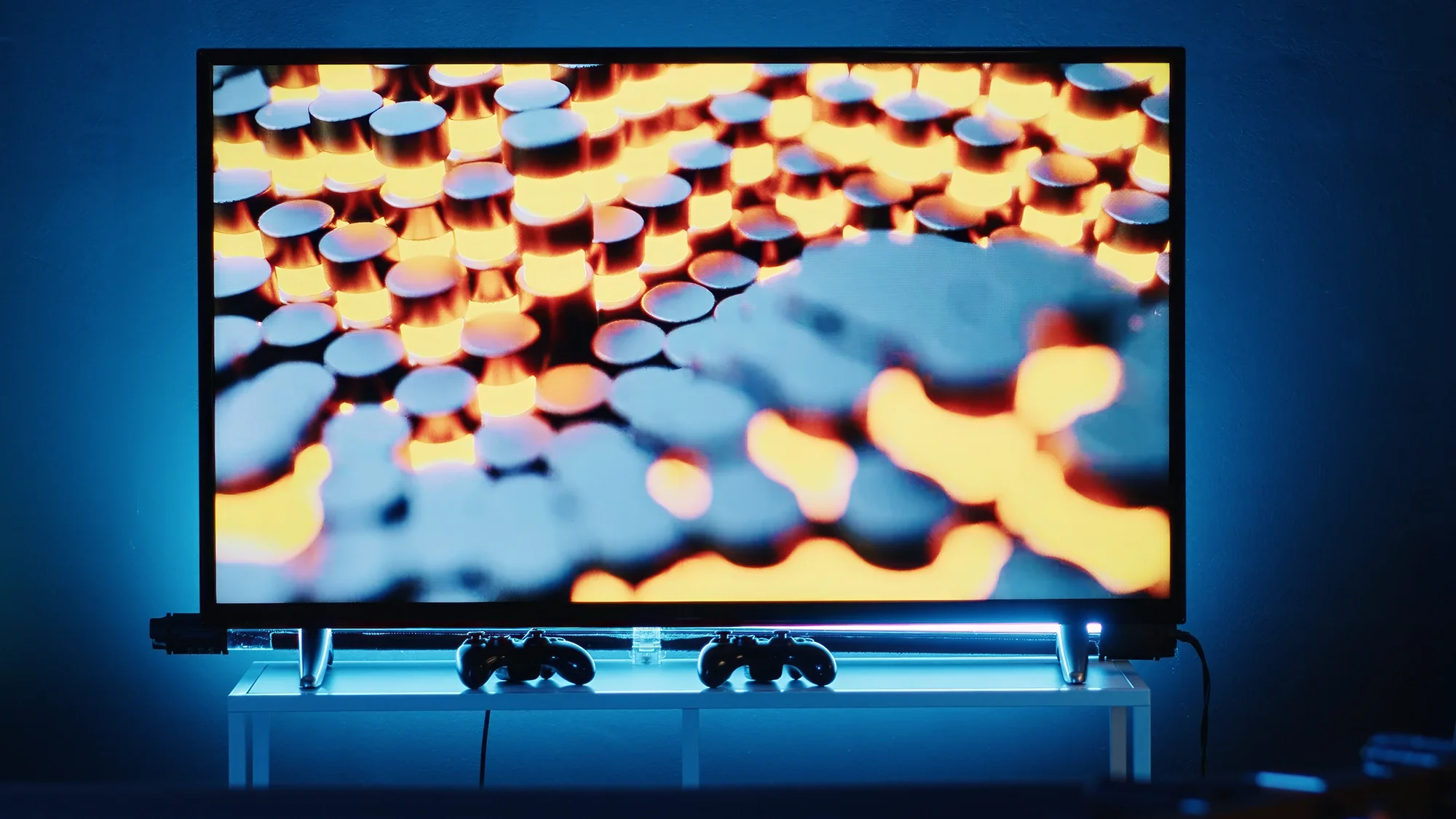
OLED offers fast pixel response and excellent contrast, while premium Mini-LED displays can provide high brightness and reduce concern about persistent game interfaces. Do not choose by panel type alone: verify refresh rate, variable refresh rate, input lag, HDMI features, and supported resolution.
For a restaurant, retail store, office, or school
A commercial LCD is often the most practical starting point because it can be bright, reliable, manageable, and rated for extended daily use. Direct-view LED becomes attractive when the display must be exceptionally large, visible from farther away, unusually bright, or integrated as an architectural feature.
For an outdoor display
Use purpose-built outdoor direct-view LED or outdoor-rated commercial signage. A standard indoor television is not designed for rain, heat, dust, direct sunlight, secure mounting, or the brightness required outdoors.
For a luxury feature wall
MicroLED or fine-pitch direct-view LED can create a dramatic, nearly architectural display. The system should be designed around the room and typical viewing position, not chosen from specifications alone.
Five questions to answer before you buy
How bright is the space? A sunlit storefront and a dark home theater need very different displays.
How far away will viewers be? Viewing distance affects screen size, resolution, and—on LED walls—pixel pitch.
What will remain on screen? Movies, menus, dashboards, games, and advertising create different demands.
How many hours per day will it operate? Commercial displays may be rated for 16/7 or 24/7 use, while consumer televisions generally are not.
What is the complete budget? Include mounting, structure, cabling, media players, control, calibration, power, installation, service, and warranty—not only the panel price.
The bottom line
There is no single winner for every space.
For value and versatility, LED-backlit LCD remains the safest starting point. Mini-LED raises brightness and contrast for premium all-purpose viewing. OLED is difficult to beat for cinematic blacks and refined picture quality. Direct-view LED is the scalable choice for large commercial and architectural displays. MicroLED points toward an extraordinary future, but for now it remains a premium specialized option.
The right decision becomes much easier when you match the technology to the room and the way the screen will actually be used.
See the display in your space before you decide
Still comparing options? Pixel Excel offers free expert guidance to help you evaluate display type, size, value, and suitability. We can also create a custom photo or video mockup so you can preview how a selected screen or video wall could look in your actual space before you buy.